About the paper
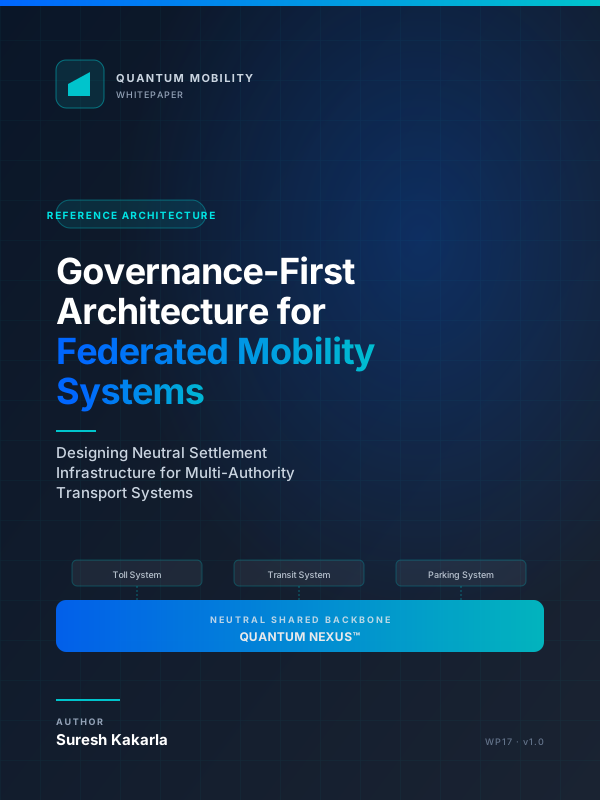
This whitepaper introduces a governance-first architecture for federated mobility systems. It makes the case that tolling and RUC modernization programs break at the point of coordination across operators and agencies—not at the point of capture or enforcement—and that the right response is a neutral shared settlement backbone, not a new central control layer.
The paper defines the architectural split between execution (what authorities and operators must retain) and coordination (what a neutral backbone can handle). It walks through the transaction and settlement lifecycle across a multi-operator network, the deployment paths that match real SI and operator programs, and the role of AI-enabled intelligence as a supporting capability—not the core architecture.
It is written for DOTs, transport authorities, system integrators, and toll operators who are scoping modernization programs and need a reference architecture that is procurement-safe, delivery-realistic, and compatible with existing field and enforcement systems.